Trunk Based Development supports Optimistic and Pessimistic Release Branching
Trunk Based Development is a style of software development in which all developers commit their changes to a single shared trunk in source control, and every commit yields a production-ready build. It is a prerequisite for Continuous Delivery as it ensures that all code is continuously integrated into a single workstream, that developers always work against the latest code, and that merge/integration pain is minimised. Trunk Based Development is compatible with a Release Branching strategy of short-lived release branches that are used for post-development defect fixes. That strategy might be optimistic and defer branch creation until a defect occurs, or be pessimistic and always create a release branch.
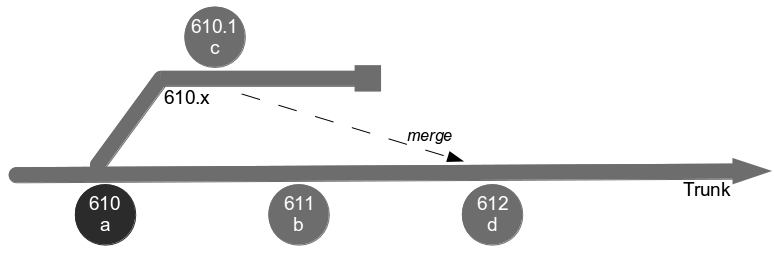
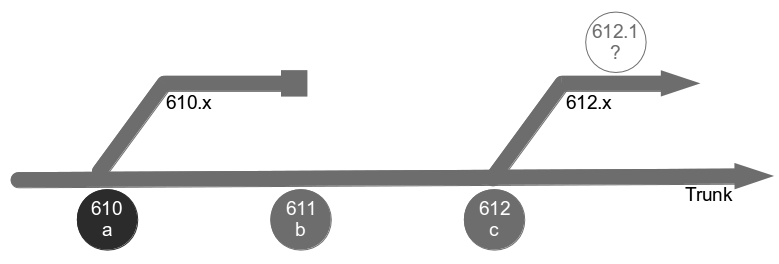
For example, consider an application developed using Trunk Based Development. The most recent commits to trunk were source revisions a and b which yielded application versions 610 and 611 respectively, and version 610 is intended to be the next production release.


With Optimistic Release Branching, the release of version 610 is immediate as there is no upfront branching. If a defect is subsequently found then a decision must be made where to commit the fix, as trunk has progressed since 610 from a to b. If the risk of pulling forward from a to b is acceptable then the simple solution is to commit the fix to trunk as c, and consequently release version 612.


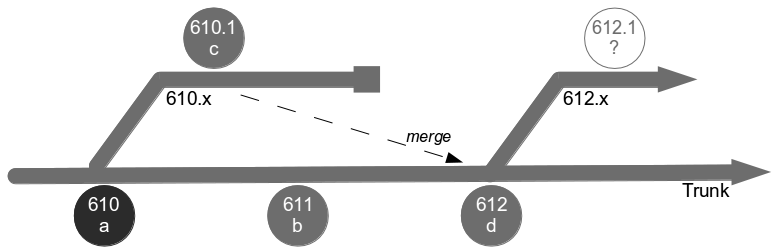
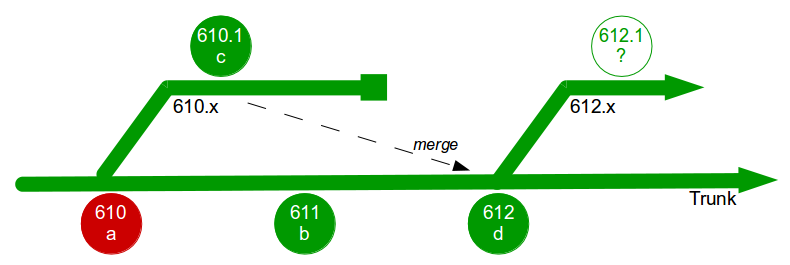
However, if the risk of pulling forward from a to b is unacceptable then a 610.x release branch is created from a, with the fix committed to the branch as c and released as version 610.1. That fix is then merged back into trunk as d to produce the next release candidate 612, and the 610.x branch is earmarked for termination.
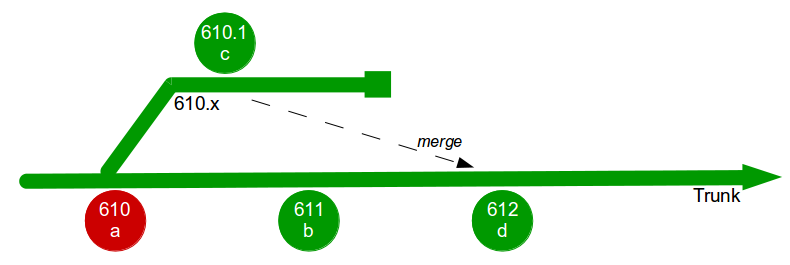
With Pessimistic Release Branching, the release of version 610 is accompanied by the upfront creation of a 610.x release branch in anticipation of defect(s). If a defect is found in version 610 then as with Optimistic Branching a decision must be made as to where the defect fix should be committed. If the risk of pulling forward from a to b is deemed insignificant then trunk can be pulled forward from a to b and the fix committed to trunk as c for release as version 612. The 610.x branch is therefore terminated without ever being used.
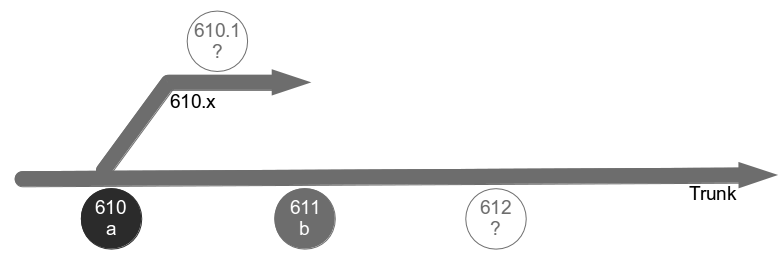
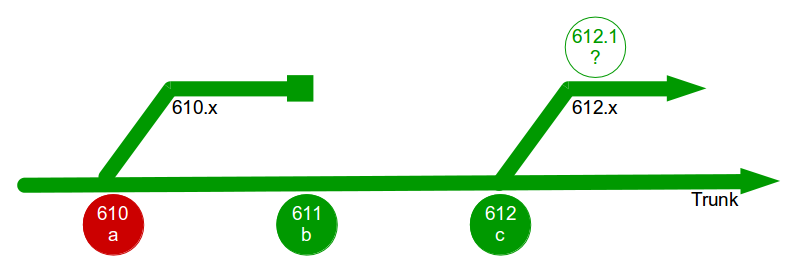
If on the other hand the risk is deemed significant then the fix is committed to the 610.x branch as c and released as version 610.1. The fix is merged back into trunk as d and version 612, which will also receive its own branch upon release.
The choice between Optimistic Branching and Pessimistic Branching for Trunk Based Development is dependent upon product quality and lead times. If product quality is poor and lead times are long, then the upfront cost of Pessimistic Branching may be justifiable. Alternatively, if post-development defects are rare and production releases are frequent then Optimistic Branching may be preferable.
Recent Comments